My wife and I are considering a move, and I came across a new-built property where part of the roof was flat, and I asked myself; Is it okay to buy a house with a flat roof?
Be careful about buying a house with a flat roof, as insurance is often more expensive, some lenders won’t lend on homes with flat roofs, and because of this and problems they cause, it can take longer to sell a house with a flat roof, which will reduce the value of any house with a flat roof.
This is a very important question to consider, as although you may like the house, and in our case we would be buying it without a mortgage, you need to consider its resale in the future where a future buyer might need to purchase with a mortgage.
With that said, why do lenders not like flat roofs?
Lenders don’t like flat roofs because they’re of non-standard construction, less durable and prone to the effects of weather related problems. Water pooling can lead to leaks, resulting in damage to the internal structures from damp and rot, which will reduce the property’s value for loan security.
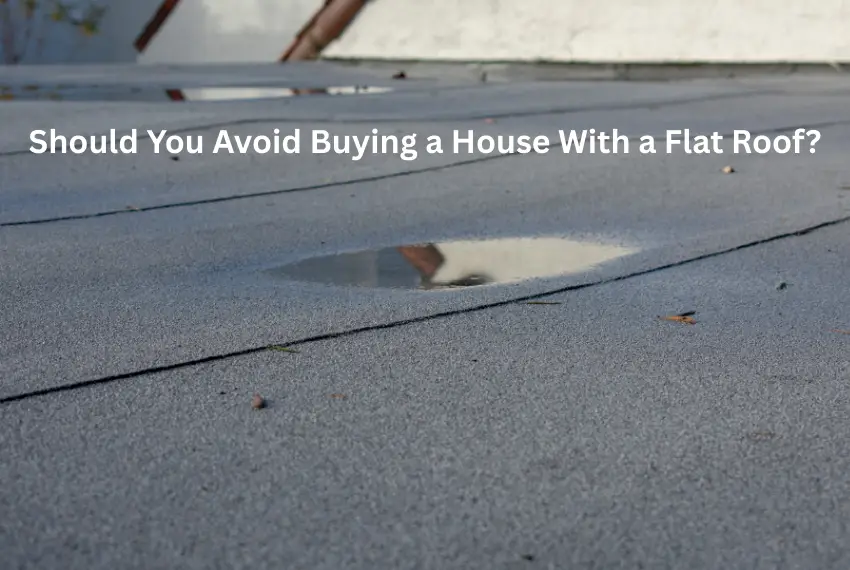
Flat roofs have a gentler slope when compared to a standard pitched roof, which can cause the build up of stagnation water and this water will lead to a greater growth of moss too. A flat roof is also prone to catch falling leaves and pine needles, which will add to the problem of water pooling.
Whereas, even with the build up of moss, leaves and/or pine needles on a pitched roof, the water will still fall off the roof. This is even the case if the gutters and drains get blocked from the debris from the roof, but at least the water will drain away.
You may still get damp problems if the gutters overflow on a house with a pitched roof if the water overflows and runs down the walls of the building, so be careful with this problem too.
Can you get a mortgage on a property with a flat roof?
You can get a mortgage on a property with a flat roof, but some mainstream lenders have stricter lending criteria, especially if more than 25–30% of the roof is flat. You can use specialist lenders, as some allow up to 100% flat roof, but other terms, like the interest rate, will not be favourable.
If you’ve found a property you love, and if you’re not put-off by the fact it has a flat roof, you might be better off to use a mortgage broker to find the right lender who will lend on the property, as well as has the most favourable terms with regards, to interest rate, deposit percentage, and your income criteria and multiples.
However, if the property you’re buying has a flat roof, make sure the flat roof is in good repair and not leaking. Make sure it has been recently cleaned of debris and there are no signs of pooling water, otherwise when the surveyor reports on the property, if the flat roof is in bad condition, the lender may refuse to lend, or put a retention on the mortgage.
Does a flat roof affect insurance?
A property with a flat roof can affect the cost of insurance premiums, as many insurers see them as higher risk for leaks and storm damage. Cover may cost more or come with conditions like proof of regular inspections, but always shop around or use a broker to make sure you get affordable cover.
Enquire as to how much the current owners pay for insurance on the property, and check they have properly disclosed the correct percentage of flat roof.
Obtain insurance quotes on the property before you proceed to buy or exchange on the property, to be certain insurance can be obtained, and to make sure you’re happy with the cost.
Insurance for a property with a flat roof isn’t always expensive
It’s also worth saying that insurance isn’t automatically sky-high just because of a flat roof. I’ve seen examples where owners of properties with a flat roof paid no more than a few hundred pounds for annual home insurance, after shopping around.
The key is not to take the first quote at face value, and always compare several insurers, or better still, let a broker do the legwork for you. You might find that some of the comparison websites might not be able to quote for a property with a flat roof too.
What is classed as a flat roof in the UK?
A roof is defined as flat if the pitch is less than 10-degrees, which means it’s almost level or has a low pitch vs standard steep-pitched roofs, where the pitch is how steep the roof is. Flat roofs are unsuitable for standard waterproofing like tiles or slates, which is why they are prone to leak.
Instead of using tiles or slates, flat roofs are covered using sheet-materials like felt, rubber, glass reinforced plastic (GRP) or other forms of high quality membrane.
Does a flat roof devalue a house
A flat roof can devalue a house because of the reduced “buyer pool“, as people generally don’t like flat roofs. Properties with flat roofs are also devalued because mortgages and insurance tend to be more difficult to get and cost more, plus flat roofs look ugly and required costly maintenance.
What are modern flat roofs covered with?
Modern flat roofs are covered with a single-ply membrane including:
Ethylene Propylene Diene Monomer (EPDM) – a synthetic rubber and is known for its excellent resistance to weathering, ozone, and chemicals.
Thermoplastic Polyolefin (TPO) – a type of polymer blend and a single-ply roofing membrane that combines polypropylene with an ethylene-propylene rubber, which is known for being flexible, tough, and durable, making it a popular and cost-effective choice for flat roofs.
Polyvinyl Chloride (PVC) – a synthetic plastic polymer derived from salt and oil or gas and is known for its durability, chemical resistance, and affordability.
Glass Reinforced Polyester (GRP) or Fibreglass – Known as a “Cure It Roof”, which is created from a liquid roofing resin combined with a reinforced mat, which offers durability, versatility, and longevity, making it a preferred choice for various flat roofing applications.
Green Roofs – Also known as Sedum Roofs or living roofs, green roofs are covered with vegetation and soil, which planted over a waterproofing membrane like EPDM.
Roofing Felt – Roofing felt is still used on modern roofs, and is typically made from a combination of organic or synthetic fibres, such as cellulose or fibreglass, which is coated with bitumen or asphalt. This still provides good waterproofing and is an affordable option.
What is the problem with a flat roof and why are they bad?
Flat roofs are often seen as less reliable than pitched roofs because they can suffer from pooling water, leaks, and have shorter lifespans. They may also be harder to insure, affect resale value, and lead to surveyor concerns, making them less attractive to lenders and buyers alike.
The following list is a more detailed list of reasons why flat roofs are bad:
Durability concerns – Flat roofs are more prone to leaks and weather damage, leading to costly repairs. This creates risk for lenders, insurers and will deter buyers.
Maintenance – Flat roofs are prone to leaks and water pooling (or ponding), and often require costly and regular repairs, which reduces the long-term reliability for lenders and buyers, whilst at the same time increasing the ongoing maintenance costs for houses with flat roofs.
Shorter lifespan – Materials for flat roofs typically don’t last as long as tiles or slates used for pitched roofs, increasing the chance of major repairs or replacement during a mortgage term.
Materials – The material used to construct flat roofs include felt, rubber, or GRP, which wear out faster than conventional tiles and slate, which increases the likelihood of expensive repairs or replacement during ownership.
Insurance difficulties – Many insurers see flat roofs as higher risk, resulting in higher premiums or limited cover, especially for water damage or storm cover.
Resale value – Homes with large flat roofs can be harder to sell or let, reducing market demand and the property’s saleability. This is what makes them more risky for lenders and is what can put off buyers from purchasing a house with a flat roof.
Lower demand – Flat roof areas, especially large flat roofs, put off buyers and tenants, which in turn will lower demand and the property value. This will affect a mortgage lenders’ security and it will impact a buyer when they come to sell the property in the future.
Surveyor red-flags – Surveyors often highlight flat roofs with defects, which can lower valuations or trigger lender requirements for retentions and a need for specialist reports. This can add to the costs of the buying process, and can lead to turning-off buyers during the buying process.
Proportion of flat roof – The bigger the flat roof area, the greater the concern. If the flat roof area is beyond 25–30%, some lenders may decline to lend or demand a higher deposit and/or charge higher rates of interest.
Thermal performance and energy costs – Flat roofs are harder to insulate well, which will raise energy costs and lower the EPC ratings on the property, which will also affect the property’s value and be a concern for lenders and buyers.
Hotter in summer colder in winter – A flat roof will make the property hotter in the summer months and colder in the winters. This is partly due to heat-absorbing materials use in covering the roof, and having less insulation space, but it is also partly due to the full surface area being exposed to the sun, whereas on a pitched roof, only half of the roof is bathed in sunlight at a time.
Ongoing upkeep requirements – Flat roofs need regular inspection and maintenance, which will add cost and hassle for owners, which will reduce buyer appeal and increases lender risk.
No loft space – Flat roofed houses, or flat roofed extensions have no loft space, which might cause a problem if you’re short on storage space.
Why do people not like flat roofs?
People dislike flat roofs because they are less durable, prone to leaks and related issues, more expensive to insure and require frequent upkeep. They can also reduce a property’s value, deter buyers, and raise lender concerns, making them a less attractive option overall.
What percentage of flat roof to declare
It’s important that you know what percentage of the overall roof space is made up of flat roof, as this percentage will need to be declared to your mortgage lender and the insurance company.
Be careful to check this properly, and you can use a surveyor to check this for you, as your insurance policy maybe invalidated if you declare the incorrect percentage. If this were the case, they would likely not pay out if you made a claim in the future, especially if the damage resulted from a storm and it was made worse by the fact the house has a flat roof.
What information to gather on flat roofs?
It is important you calculate what percentage of the overall roof space is flat roof. Additionally, you should ask for paperwork on the age of the flat roof and when it was installed or last repaired of renewed.
Ask for details of any guarantees or warranties too, as this will help to reduce the lender’s risk perception if they are satisfied with the general state of the flat roof.
Find out what materials were used to cover the flat roof, because if this has been done with modern materials, this will help to build a better picture in the eyes of the mortgage companies and the insurance companies. If needs be, commission a specialist roof inspection, or ask a builder to inspect the flat roof’s integrity.
How long does a flat roof on a house last?
A flat roof will typically last for 15–25 years depending on the material used, quality of installation, and level of maintenance. Felt and rubber roofs are usually shorter-lived, while Glass Reinforced Plastic (GRP) and high-quality membranes can last longer with proper care and maintenance.
Proof of recent inspection of the flat roof for insurance
Be aware that some insurers will only provide cover on a flat roof if you can show it’s been inspected by a qualified roofer within the last five years.
They may even want proof of any repairs done as a result. This isn’t something most people realise until they apply for cover, so it’s worth checking in advance and making sure you have all the paperwork in order.
Make sure you do this research and checking before you commit to a purchase, as you don’t want to end up with buyer’s remorse.
Developer warranties and exclusions
If you’re buying a newer build or a property always check the small print on the builder’s warranty, such as NHBC. If its an older property, but that has a recent extension with a flat roof, check the warranties and insurance the owner has on the work done.
Specialist insurance broker can help with flat roof property insurance
If the property has a large proportion of flat roof, it is often easier, and cheaper, to use a specialist insurance broker. They have access to insurers who are more flexible with “non-standard” construction and can usually find more competitive premiums than you might manage on your own.
Is a property with a flat roof non-standard construction?
Properties with flat roofs are usually classed as “non-standard construction” by lenders and insurers, which doesn’t mean you can’t get a mortgage or get insurance cover. But it may reduce your options, require extra checks, or make terms less favourable compared to standard pitched roofs.
Advantages and disadvantages of flat roof
In brief the advantages of a flat roof is they offer a low cost option that allows you to create addition internal rooms without needing to raise the roof-height above what might be considered too high for planning.
In simple terms the disadvantages of a flat roof include drainage problems, they require more maintenance and cost outlay, they have a short life span vs conventional pitched roofs and don’t offer the same level of insulation as a pitched roof, plus they are not pleasing to the eye.
I hope this article has helped about should you avoid buying a house with a flat roof
If this article has helped on ‘should you avoid buying a house with a flat roof’ please share it on your favourite social media site.
Also, if you have any questions, please feel free to comment below too. Alternatively, if you need more help, please feel free to contact us on our contact us page here. Or join the discussion and ask your question in the property forum.
Can You Rent Out A Retirement Flat? What are the… You can only rent out a retirement flat if the lease allows you to do so, but you may need to obtain permission from the freeholder and pay a consent…
Article written by Russell Bowyer who has been investing in property since purchasing his first commercial property in the 1990's for his own Chartered Accountancy business. But his first property investment project was to turn an old dilapidated restaurant into a large 5-bed home, which he purchased for £117,500 and sold for £450,000 (to see an "after" photo of the house before it was sold see here: About). Russell owns a number of investment properties, which includes houses, flats and HMO's. More recently he has turned his creative side to investing in property using lease options. His largest lease option deal to date was to acquire 12 properties worth over £2 million for just £12, which means he paid just £1 to acquire each property!